

1. Turn the dead end into a narrow question
“Find earlier Verschoors” is difficult to act on. “Find an independently informative birth or baptism entry for Cornelis Verschoor, estimated born around 1754 in Zwartewaal” gives you a person, an event and a starting area. Decide what an answer would need to establish before widening the search.
The Verschoor project's owner permitted these examples of long-deceased people. The screenshots show existing production records. The historical readings come from the project; the originals have not been independently re-read for this guide. No production records were changed for the examples.
The project knows Cornelis's own death entry and records his parents as Jan Verschoor and Neeltje Zwartveld. It still lacks an independently checked birth or baptism entry for Cornelis. This is a planning example based on the documented gap. No searches proposed below are presented as completed attempts.
2. Audit the evidence you already have
Return to the closest well-identified record. Check the entry reference, names, relatives, place wording and the basis of any estimated dates. Separate something that has never been searched from something searched unsuccessfully, and an identified unreadable entry from an absent one.
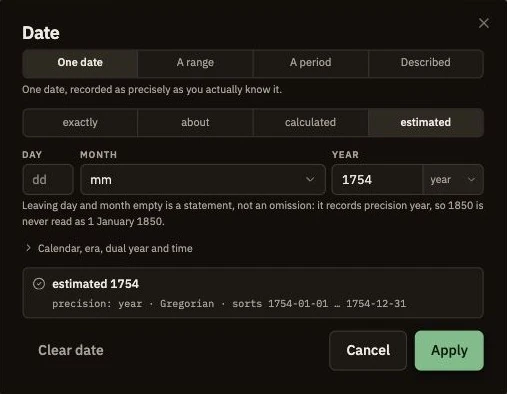
The retained starting reference is Zwartewaal death register 1826, 106 / 300 / entry 24. Its project reading supplies age 72, parents Jan and Neeltje, spouse Pieternelletje Poldervaart and a connection with Zwartewaal. These details can help evaluate a candidate found elsewhere.
Use the uncertain dates guide for the difference between an estimate and a supported boundary. Do not restrict an initial search to 1754 merely because that is the year displayed in the tree.
3. Choose one search that could change the conclusion
First identify whether surviving birth or baptism registers cover the relevant locality and period. Check their dates, gaps, denomination where relevant, and whether an index covers the full register. Then choose a justified initial range around the estimate. Explain your chosen range in the task so it can be widened deliberately.
- Question: Can a birth or baptism entry identify Cornelis and his parents?
- Starting evidence: Estimated birth around 1754; parents Jan Verschoor and Neeltje Zwartveld according to his death entry.
- Planned check: Identify relevant surviving registers, examine the chosen coverage and preserve candidate references.
- Expected record of the attempt: Actual coverage checked, name variants used, candidates found and limitations.
This is an example plan, not an archive search result. If the necessary collection is unavailable, record that limitation. It may make locating an alternative copy or a different source the most useful next action.
4. Use relatives as leads without inventing their dates
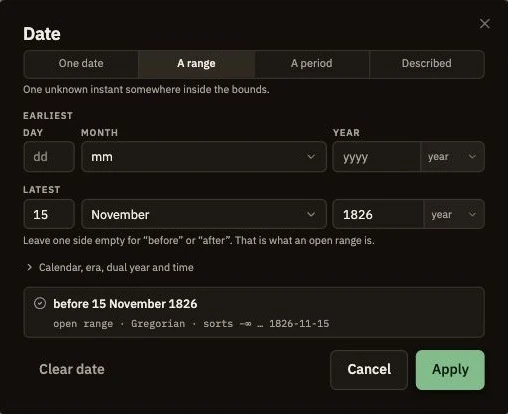
A spouse, child or associate can provide another route into the records. Here, search leads include the named parent pair and Cornelis's wife, while keeping each person's identity distinct. A matching Jan in the same region is only a candidate. Compare partners, children, dates and source wording before attaching him to the family.
If a candidate parent marriage is found, test it against Cornelis and any other independently supported children. Do not assume an exact marriage date, birth order or complete set of siblings from a tree's current layout. The parent-link guide explains how to evaluate the connection.
5. Widen the search for a stated reason
After documenting the first attempt, decide what the result suggests. Missing index coverage may justify reading images. A credible birthplace elsewhere may justify another locality. A mismatch in the supposed parents may require revisiting identity. Change one part of the search at a time so you can explain what was tested.
Distinguish no matching entry within the inspected coverage from evidence that an event did not occur. Note unreadable pages, missing volumes and uncertain spellings. Use the places guide when names or jurisdictions make the coverage unclear.
6. Leave a useful stopping point
Record the actual outcome, including an unsuccessful or incomplete search. Update the research log with the collection, scope, result and reference. Keep a current conclusion separate from the list of attempts, and make the next research task specific enough to resume.
A documented limit is progress: you may have excluded one candidate, established which pages were checked, or learned that a needed register does not survive. If nothing changes the parent identification or estimated date, leave them as they are. Stop when further work needs a new source, access or skill, and state what would make the question worth reopening.